

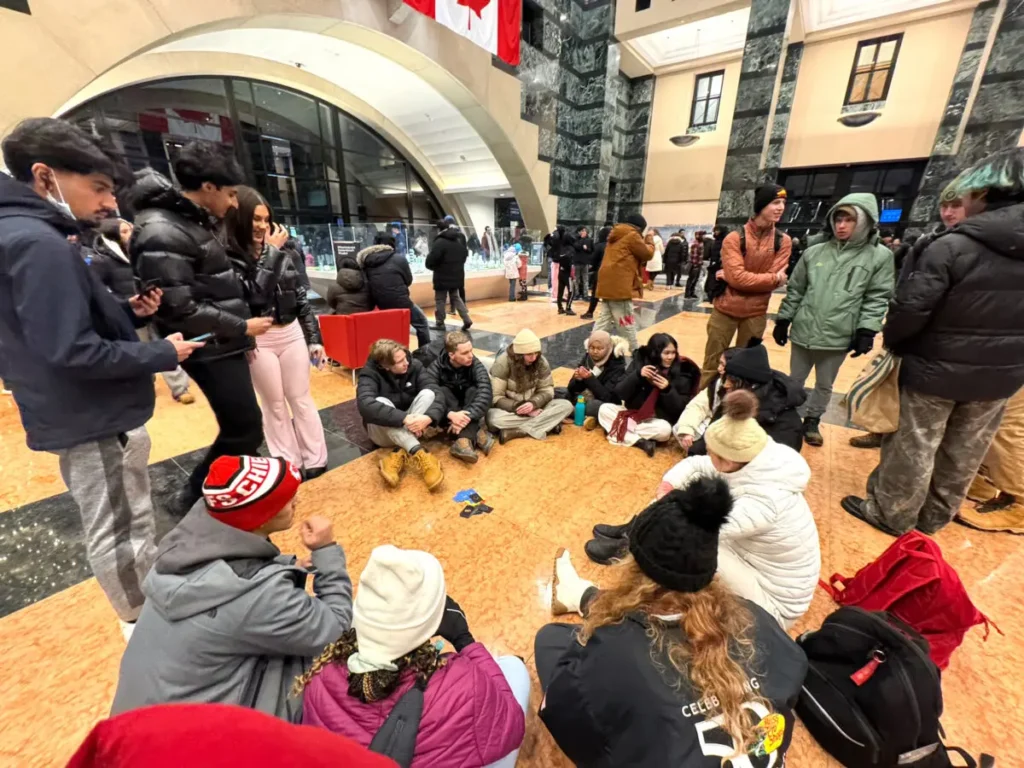
A team of multiple generations from Second Baptist Church, Springfield, Missouri prepares to serve during a visit to Toronto where they engaged in conversations and shared their beliefs. (Photo Provided)
By Chris Doyle, IMB
A common desire among Southern Baptist churches is to incorporate unity among the congregation. In other words, they want to be multigenerational.
Second Baptist Church in Springfield, Missouri, has made “multigenerational” an emphasis in their pursuit of mission work, and the result has been a success.
“It’s difficult to engage cross-generationally, but when you put believers of varying ages alongside each other with a common cause and a common love for Christ, it becomes beautiful,” said Rob Brewer, Second Baptist’s missions pastor. “We’re not doing this in silos. The youth minister isn’t running his own missions thing; the missions minister isn’t just leading a group of adults. We’re doing this together.”
Brewer makes this a priority whenever inquiring about Second Baptist doing a mission project. “Can you host multiple age groups?” is the first question asked to potential missions partners.
Whether they are serving in a community center in Munich, a church-planting effort in St. Louis or a disaster-relief hub in Toronto, Second Baptist seeks mission work where an 80-year-old could stand beside a college sophomore and a high school freshman, handing out water bottles to the same community residents and sharing the gospel.
Lead pastor John Birchett has seen many members from Second Baptist commit to serving in missions, and he shared how this is a churchwide emphasis.
“It’s important for me that we not simply be a financial resource to our mission field,” Birchett said, “but to really engage our people to live at a missional level.”
He spoke of “Kingdom First, Second Strong” not as a polished slogan but as a lived mindset that trickles down from the high school youth group to the pews of the senior members.
In 2025, the church sponsored two trips to serve in Toronto, where student pastor Josh Phillips described as a “really unique place” to do mission work.
“Toronto is one of the only locations where you can work with the North American Mission Board, Send Relief and the International Mission Board, all three in one place,” Phillips said.
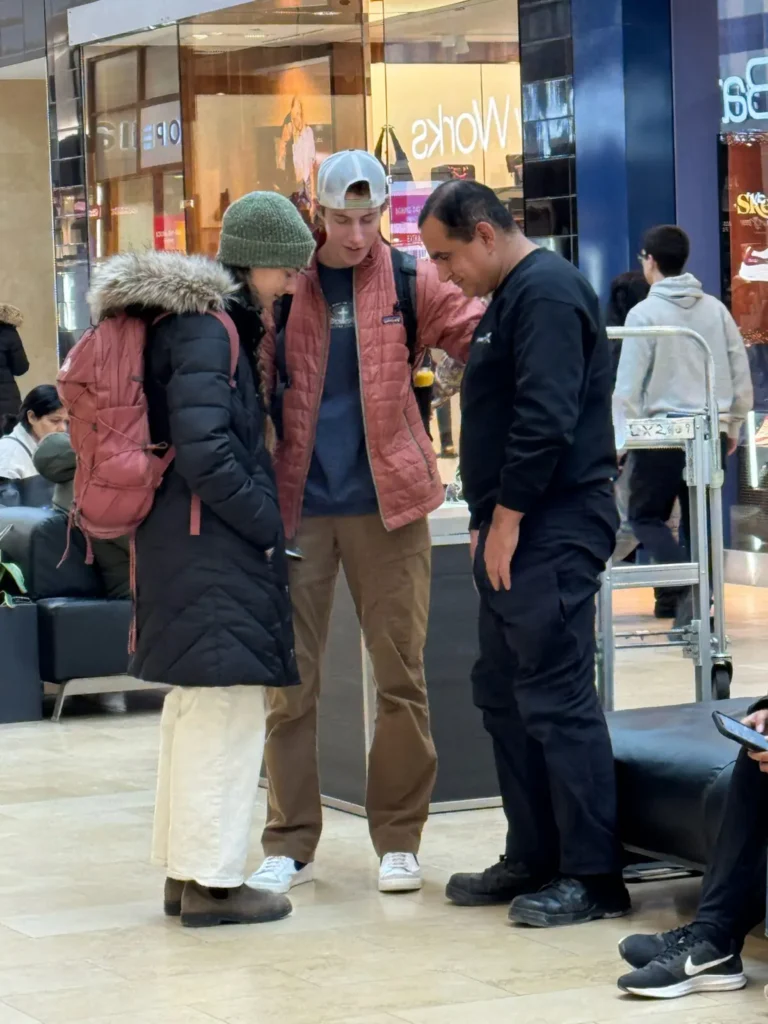
He explained how the Canadian city offers a setting to introduce both students and adults to what NAMB does with church planting, what Send Relief does with meeting human needs and how the IMB is reaching different people groups with the gospel in a major international metropolis.
“It’s exciting to be able to introduce all this great work to our church members,” Phillips said.
Another team from Second Baptist recently went to Munich, Germany. The team featured a mixture of college students and retirees. The church sent a similar crew to serve in Northern Africa.
When the teams returned to Springfield, the impact was palpable, Brewer said. Church hallways buzzed with familiar faces, exchanging hugs and handshakes among different age groups. That natural cross-pollination — “the natural pathway” Brewer called it — was exactly what the leadership at Second Baptist hoped to foster.
These short-term mission projects also meet another goal of the church’s leadership. Second Baptist is seeing members commit to serving long term. Brewer said one young woman from their church recently went through training to become an IMB missionary.
“She is actually another great story of someone we took on one of our Germany mission trips,” Brewer said. “She went and served there, fell in love with the country and served a second time with us on a short-term trip. When she returned, she met with us as a staff and said, ‘I feel led to go.’ She’s going to be working with one of the teams that we send our teams to, so it’s just another great picture of what this all can look like.”
Second Baptist has connections with 27 IMB missionaries whom they are praying for and supporting, and the church is currently doing mission projects with nine of these missionaries (two in Frankfurt, three in Munich, two in Northern Africa and Middle East and two in Toronto).
When asked what encouragement they would share with churches that want to do more with mission work, Second Baptist leadership gave five tips:
- Find leaders with a mission heartbeat. Consider people who have walked on the mission field themselves.
- Make partnership criteria explicit. Can they host multiple generations?
- Build a pipeline that starts in grade school and ends in lifelong service. Children and students can do mission projects, even locally. Aspire to send members to serve full-time.
- Invest in preparation. Applications, interviews and vision trips keep the focus sharp.
- Encourage cross-generational teamwork. Let retirees mentor college students. Let youth invite older adults to worship.
Birchett also commended the IMB, and specifically IMB President Paul Chitwood, for the growth of missions involvement at Second Baptist.
“Under Dr. Chitwood’s leadership, the willingness of missionaries to build deep ties with local churches here in the United States is significant,” Birchett said. “(The IMB) desires that as much as we desire it.”
Second Baptist Springfield continues to live out its motto, “Kingdom First, Second Strong,” not through grand statements but through everyday moments: an 80-year-old praying over a college student’s final exam, a teenager sharing a meal with a missionary on the field, a pastor watching his congregation become a team that travels the globe together.
In the end, the true mission isn’t only the places they go, but the people they become — a body of believers, young and old, stepping out together into the world, bearing the same love of sharing the gospel to a lost world and the same willingness to ask, “Why not me?”
Chris Doyle writes for the IMB.
The work of the IMB is sustained through faithful giving of Southern Baptists through the Cooperative Program and the Lottie Moon Christmas Offering®.