


LITTLE ROCK – Pastors and church leaders at the 2026 Arkansas Baptist Evangelism Conference on March 9 at Geyer Springs First Baptist Church were reminded that revitalizing churches starts with renewed commitment to the Great Commission.
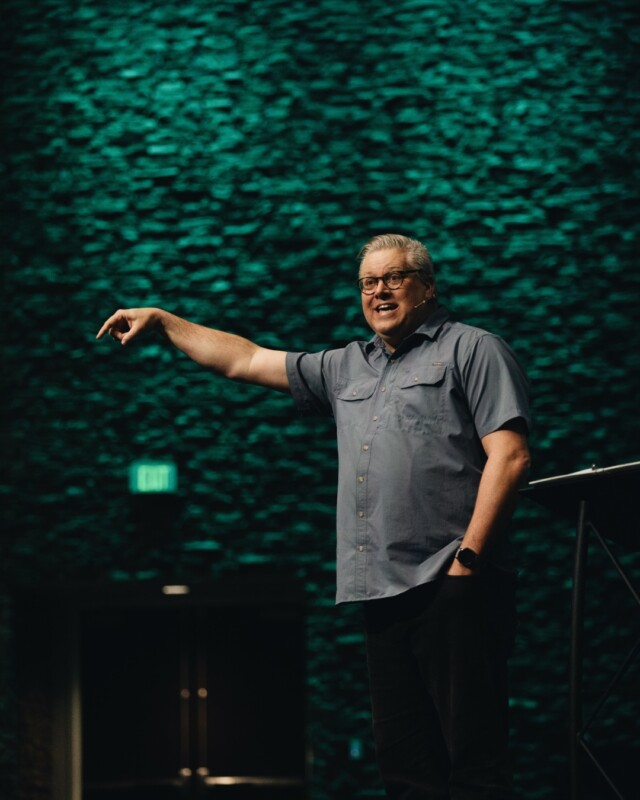
Across four sessions, the guest speakers Mark Hallock and Mark Mittelberg acknowledged the challenges facing congregations today while highlighting the hope found in Christ’s mission.
“Our God loves bringing dead things back to life,” said Hallock, a Colorado pastor who works with churches nationwide. “He brings dead people back to life spiritually, and He can bring dying churches back to life too.”
Hallock pointed to the difficult landscape many churches face. Thousands of Protestant congregations close each year across North America, while far fewer are planted. Within the Southern Baptist Convention, he shared roughly 17churches close their doors weekly.
Behind the numbers, Hallock said, are faithful believers who love Christ but often feel discouraged or unsure how to move forward.
“When a church closes, we lose a gospel witness in that community,” he said.
While church planting remains essential, Hallock emphasized that revitalization is equally critical for reaching communities with the gospel.
“If we want to push back spiritual darkness,” he said. “We have to plant churches and revitalize churches.”
Returning to the mission of Jesus
Hallock pointed to Jesus’ command in Matthew 28:18-20 as the church’s defining mission: make disciples of all nations.
According to Hallock, renewal begins when churches realign themselves with that mission.
“The church exists to make disciples of Jesus Christ,” he said. “That’s why we’re here.”
He highlighted several principles from the Great Commission.
First, churches must submit to the authority of Christ. Jesus declared that all authority in heaven and on earth belongs to Him. When congregations remember that the church belongs to Christ—not to any pastor, leader or tradition—unity and mission begin to return.
Second, believers must go to people who do not know Christ.
Every Christian, he said, lives in a mission field among neighbors, coworkers and community members.
Third, churches must prioritize discipleship rather than attendance.
True disciples love, trust and follow Jesus, Hallock said. Mature disciples then help others follow Him as well.
Fourth, the church must think both locally and globally. Jesus’ command to make disciples of all nations calls believers to pray, give and go in support of gospel work around the world.
Hallock also emphasized the importance of baptism and teaching.
Baptism publicly identifies a believer with Christ, while teaching and mentoring help believers grow in obedience to Jesus.
Finally, Hallock reminded leaders that they do not carry out this mission alone.
“We don’t make disciples in our own strength,” he said. “Christ promises to be with us.”
Rediscovering excitement of sharing the gospel
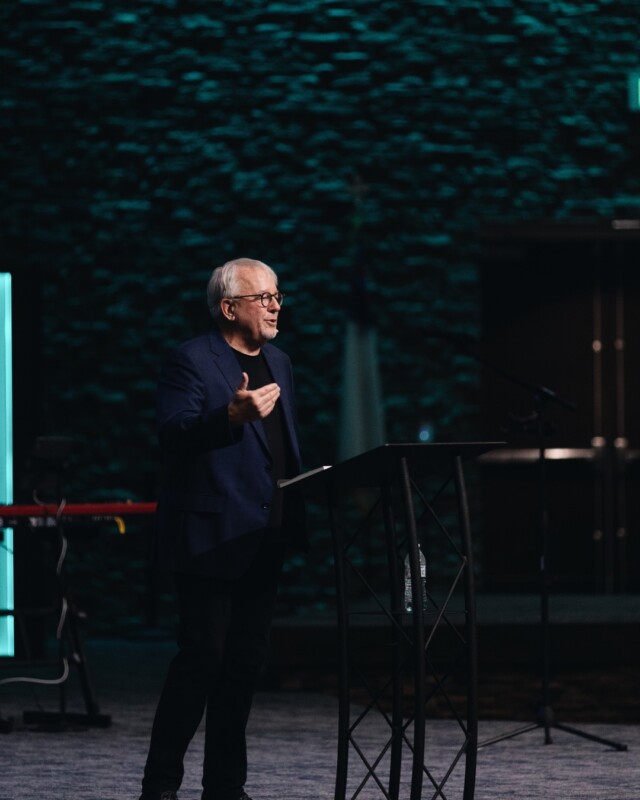
Author and evangelism trainer Mark Mittelberg encouraged pastors to help congregants rediscover the excitement of sharing the gospel. Quoting lyrics from Switchfoot, he reminded attendees that Christians “were meant to live for so much more.”
Mittelberg shared how, shortly after becoming a Christian, he nervously approached a friend about Christ. That conversation eventually led her and her husband to decades of missionary work with Wycliffe Bible Translators.
“That’s why evangelism matters,” Mittelberg said. “You never know what God might do through one conversation.”
Many believers hesitate to share their faith, assuming evangelism is reserved for bold personalities. Mittelberg emphasized that God uses people in different ways.
Some people naturally build friendships that lead to spiritual conversations. Others demonstrate Christ’s love through acts of service. Some share their personal testimony, while others enjoy answering questions about faith.
Still others are comfortable presenting the gospel clearly and directly.
“When people discover the way God wired them, evangelism becomes much more natural,” Mittelberg said.
Finding their natural style was one of five keys to evangelism Mittelberg shared with attendees. The other keys were to know your mission, take risks, operate in God’s power, and go.
“God has to be at work. We have to be praying. Nothing is going to happen if God is not working in and through us,” he said.
A strategy for evangelistic renewal
Mittelberg outlined a six-stage process churches can follow to refocus on evangelism.
The process begins with personal renewal among leaders. Pastors and ministry leaders must cultivate a heart for the lost through prayer, Scripture and relationships with people far from God.
“If it doesn’t start with you, it won’t spread to your church,” he said.
Next, churches must intentionally instill evangelistic values. Sermons, testimonies and stories of changed lives can help shape a congregation’s culture.
“When people hear about lives being transformed, it raises the evangelistic temperature of the whole church,” Mittelberg said.
He also encouraged churches to designate a clear evangelism leader.
“In healthy organizations, everything important has a name on it,” he said. “Someone needs to own this mission.”
Training believers to share their faith is another key step. Mittelberg challenged churches to equip every member to talk about the gospel naturally.
From there, a core team of evangelistically minded members can form to help lead outreach efforts.
Finally, churches can launch outreach initiatives, service projects and community events that create opportunities for gospel conversations.
But Mittelberg cautioned leaders not to begin with programs alone.
“If you jump straight to big events without changing the culture,” he said, “people will resist.”
Renewal begins with us
Both speakers throughout the conference emphasized that renewal does not begin with strategies alone.
It begins with surrendered hearts.
Churches must once again embrace the mission Jesus gave them—to make disciples and reach people with the gospel.
Hallock summed up the challenge simply.
“May it begin with us.”
If churches reclaim that mission, he said, renewal is not only possible. It may already be starting.
Renew Arkansas: Helping churches take the next step
In between the sessions led by Hallock and Mittelberg, Bob Johnson, Arkansas Baptist Evangelism + Church Health Assistant Team Leader, shared about Renew Arkansas.
Johnson described the church revitalization strategy as a collaborative network of pastors, church leaders, associational missionaries, and coaches, all committed to helping churches discern God’s path forward.
Renew Arkansas works in phases, starting with exploration and assessment, then moving into discovery of a church’s current reality, and finally helping leaders implement a chosen pathway — whether revitalization, partnership, or reimagining ministry. Throughout the process, prayer, coaching, and collaboration guide churches toward renewed health and mission focus.
Leaders and pastors who want to learn more can visit absc.org/renew and begin the journey.