
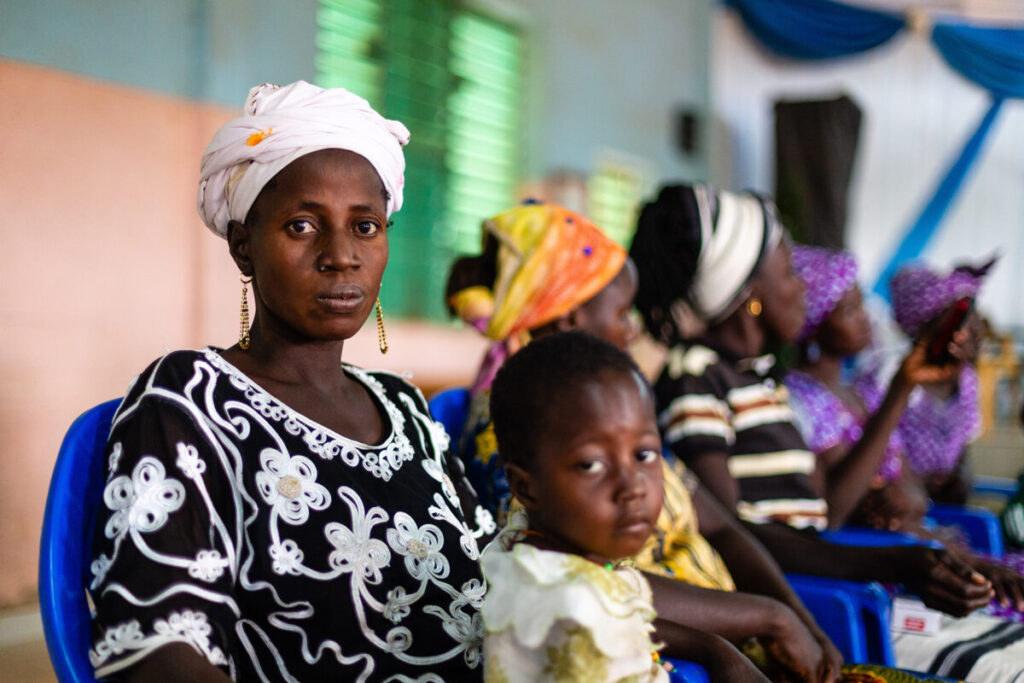
A woman and her child sit during a training in West Africa. Violence has left many women as widows and children as orphans. Trauma healing workshops hosted by Katee Sheppard and national believers help survivors process their grief and trauma. (IMB Photo)
By Tessa Sanchez, IMB
Editor’s Note: Last month, IMB missionary Katee Sheppard was featured during the Week of Prayer for International Missions. As you learn more about her ministry and continue to pray, please remember the harsh reality of many who have no hope apart from the good news.
**Warning: Story depicts scenes of graphic violence
Yacouba couldn’t stop the tears from flowing.
He heard there had been an attack on his brother-in-law’s village by a terrorist group. They hadn’t been able to get in touch with him, so he and his wife went to the village to search for her brother.
Yacouba found the village plundered. To his horror, he and his wife found her brother’s body.His head had been decapitated, but propped back up on the body, facing east toward Mecca, the Muslim holy city.
He couldn’t get the image out of his mind. He closed his eyes, and the scene was once again before him.
When Yacouba and his wife returned home, they couldn’t find their son, Saidou, who was around age six. They searched for several days before they found him, buried, but still alive.
Saidou buried himself under a pile of sand with his head sticking out so he could breathe. He said he was hiding from the terrorists.
Katee Sheppard didn’t make eye contact as she shared this story and other stories over Microsoft Teams as she sat in her car. Sheppard, a missionary with the International Mission Board, facilitates trauma healing workshops in West Africa. Sheppard said she can’t share the stories she’s heard without crying.
She looked up and over to one side and shared how she heard story after story about the women who witnessed the slaughter of their husbands and their worst nightmare becoming a reality when their children fled in fear. Many have not been reunited.
“The stories are horrific,” Sheppard’s voice caught, and tears swelled. “They’ve seen their family literally killed in front of their eyes. They’ve lost their homes. They’ve lost whatever food they had. They lost whatever cattle they had. They have no place to live, no means to eat.”
Terrorists often enter villages and kill the men, leaving villages of widows and children. The attack on Yacouba’s brother in law’s village was just one such event. Male survivors opt to sleep in trees out of fear of the terrorists returning.
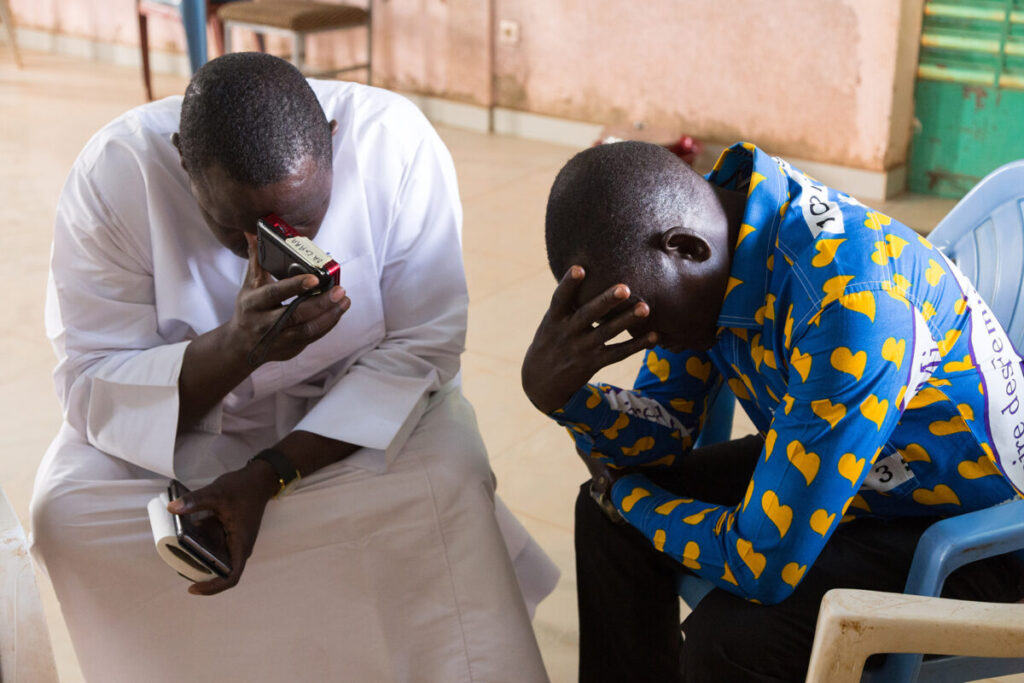
Sheppard is always amazed to hear participants say in trauma healing trainings, “Now we understand.” They state this after they’ve heard the stories of everything Joseph, from the Bible, endured in his life, andthat God was still with him in every crisis.
Participants resonate with what Joseph told his brothers, “Do not be afraid. You meant to harm me, but God used what has happened for good — not just for me — but so that many other people could be saved.”
“With that understanding of the story, they leave with hope,” Sheppard said.
The seven-session training, which focuses on a different Bible story each week, is called New Hope. Sheppard said that’s exactly what happens. Some participants come with suicidal thoughts but leave with a new hope.
The training teaches participants to be good listeners when others share their traumatic stories. New Hope teaches believers to look back at what has happened, look up to see what God has for each participant and then look forward to what is next.
Sheppard said, “Hearing the stories of their personal trauma and then hearing their personal testimonies of how God’s stories have transformed their lives, given them hope, and allowed them to move forward, is beyond anything she’s experienced. They come together with absolutely no reason to smile, yet they do when they leave.”
When asked if Sheppard could share the story of someone who went through the training, she paused a long time. The silence was heavy before recounting Yacouba’s story of finding his brother-in-law.
Sheppard heard Yacouba’s story from a New Hope training being lead for pastors and their wives. Sheppard wanted to equip the pastors and their wives to serve the displaced in order to equip the church to walk alongside members of their community and share the hope and love of Christ.
During one session, Yacouba stood.
“I need to talk, I need to say something,” he said.
Sheppard got choked up as she shared the next part.
“I have to tell you, ‘I have hope now. I’m not healed yet, but we can now begin to heal,’” Yacouba shared.
Six generations and counting
The New Hope training is one piece of a multi-generational tapestry of men and women who’ve received training from Sheppard and her national partners during her 27 years of service.
Sheppard has seen six generations of West African believers trained in oral storying methods. Most people in West Africa prefer oral communication methods over written ones, and Sheppard facilitated trainings to help people learn about God and the Bible, equip believers to share their faith and find healing from trauma.
Her storying training began with West African truck drivers who took the gospel on their trade routes across country lines.
From this initial ministry, national partners, now equipped in these methods, went to a pastoral training school. This group was the beginning of the second generation of believers training others using adult stories from God’s Word.
It was also the first time women, accompanying their husbands to the school, were able to participate in training. Their primary role had been washing dishes and preparing meals for the men in the school, but they desired to be equipped to walk alongside their husbands in ministry.
Sheppard approached the president of the Baptist Women in the country to ask about training other women. She said they could train representatives from each language group in the country, and the newly trained women would then return to their villages and train others. The women became a large piece to the second generation.
As COVID-19 spread around the world, a third generation of story tellers was birthed as a way to continue to share God’s Word when church doors were closed. Sheppard assembled participants from the Baptist churches in the capital city. Because this West African culture primarily spends their time and lives outside, everyone came together, sat outside and spaced apart, and learned to tell stories.
Sheppard then brought in the initial group of women to now experience the New Hope Trauma Healing training. The women, representing the 4th generation training, knew exactly who they would return to train. They had friends who experienced trauma, and they never knew what to say. Now, they did.
The fifth and sixth generations of trained Christians soon emerged from the trauma healing trainings.
“Our focus from the beginning is we train nationals, and we get out of the way,” Sheppard said.
Her current role involves encouraging those who have been trained and continuing to cast vision.
They’ve trained Baptist pastors in two West African countries in oral storying trainings. Believers have the tools to reach unengaged and unreached people groups and are currently doing so.
A ministry that started with truck drivers is now an interconnected network of West Africans who are sharing their faith and the new hope they’ve found in the Man of Sorrows, Jesus.
Some names changed for security.